* Machine Learning and AI with Python : From Basics to Advanced Level

Categories: Analysis, Python
Wishlist Share

About Course

Course Overview

This course provides a hands-on introduction to machine learning and AI using Python. Participants will learn key concepts such as supervised and unsupervised learning, model evaluation, and feature engineering. The course covers popular libraries like Scikit-Learn and TensorFlow, with practical applications in healthcare and business. By the end, students will be able to develop and interpret basic machine learning models to solve real-world problems.

Key Skills

  • Supervised Learning Fundamentals (Classification & Regression)
  • Python for Machine Learning (Pandas, NumPy, Scikit-learn)
  • Key ML Algorithms (Linear Regression, Decision Trees, SVM, k-NN)
  • Model Evaluation & Metrics (Accuracy, Precision, Recall, F1-Score)
  • Data Preprocessing & Feature Engineering

Projects in this course

In this project, you will apply supervised machine learning techniques to predict customer churn for a telecom company. Using a real-world dataset, you will:

  • Preprocess the data (handling missing values, encoding categorical features)
  • Train and evaluate models like Logistic Regression, Decision Trees, and k-NN
  • Compare model performance using metrics like accuracy, precision, recall, and F1-score
  • Optimize models through hyperparameter tuning
  • Visualize insights with Matplotlib & Seaborn

By completing this project, you will gain hands-on experience in classification problems, model evaluation, and real-world data handling.

Show More

Course Content

Types of ML Models
1) Regression 2) Classification 3) Clustering 4) Reinforcement Learning

  • What is Machine Learning?
    00:00
  • How does AI work?
  • Types of Machine Learning Models (Core Concepts)
    00:00
  • 1) Regression — Predicting Numbers
    00:00
  • 2) Classification — Predicting Categories
    00:00
  • 3) Clustering — Finding Hidden Groups
    00:00

Predicting Diamond Prices with Machine Learning

Exercise 2. Supervised Learning (Linear Regression)

Exercise 3. Compare Regression Model Building Exercise (Linear, Ridge, Lasso, Elastic Net)
This exercise consists of several phases designed to guide you through the full machine learning workflow for several regression model. Phase 1: Understand the Problem Define the business or prediction goal. Identify the target variable. Identify the input features. Determine whether this is a regression or classification problem. Phase 2: Explore the Data (Exploratory Data Analysis - EDA) Load and inspect the dataset. Phase 3: Prepare the Data Select relevant features. Encode categorical variables (if any). Scale/normalize features if needed. Split the dataset into training and testing sets (e.g., 80/20 split). Phase 4: Build the Regression Models (Linear, Ridge, Lasso, Elastic Net Regression) Using the same training and testing data, build: Linear Regression Ridge Regression Lasso Regression Elastic Net Regression Tune hyperparameters (e.g., alpha). Use cross-validation for better model selection. Examine model coefficients. Understand the intercept and feature importance. Phase 5: Evaluate the Regression Models (Linear, Ridge, Lasso, Elastic Net Regression) Make predictions on the test set. Calculate evaluation metrics: MAE (Mean Absolute Error) RMSE (Root Mean Squared Error) R² (R-squared) -Compare training vs. testing performance (check for overfitting). Phase 6: Compare Model Performance Compare MAE, RMSE, and R² across all models. Analyze bias vs. variance. Identify the best-performing model. Phase 7: Model Interpretation Interpret coefficients. Understand how each feature impacts the prediction. Discuss regularization effects (Ridge vs. Lasso vs. Elastic Net). Phase 8: Final Conclusions Select the best model. Summarize findings. Suggest possible improvements (more data, feature engineering, different algorithms).

Wrapping Up – From Learning to Doing
By the end of this chapter, students should: 1) See how everything connects 2) Feel confident building simple ML models 3) Know what to do next

Earn a certificate

Add this certificate to your resume to demonstrate your skills & increase your chances of getting noticed.
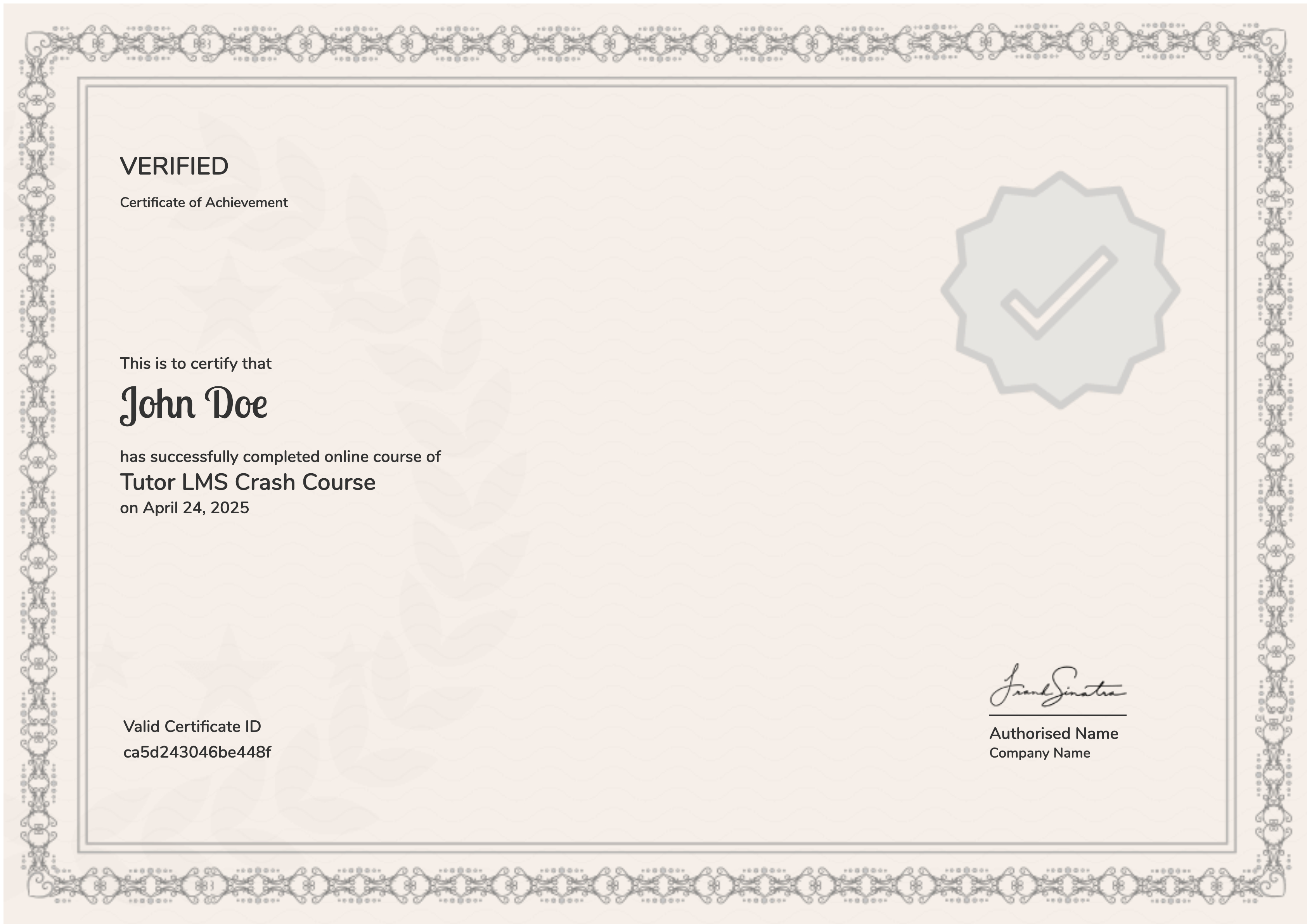
selected template

Student Ratings & Reviews

No Review Yet
No Review Yet